Council President Responds to Report of Underground Homeless Encampment
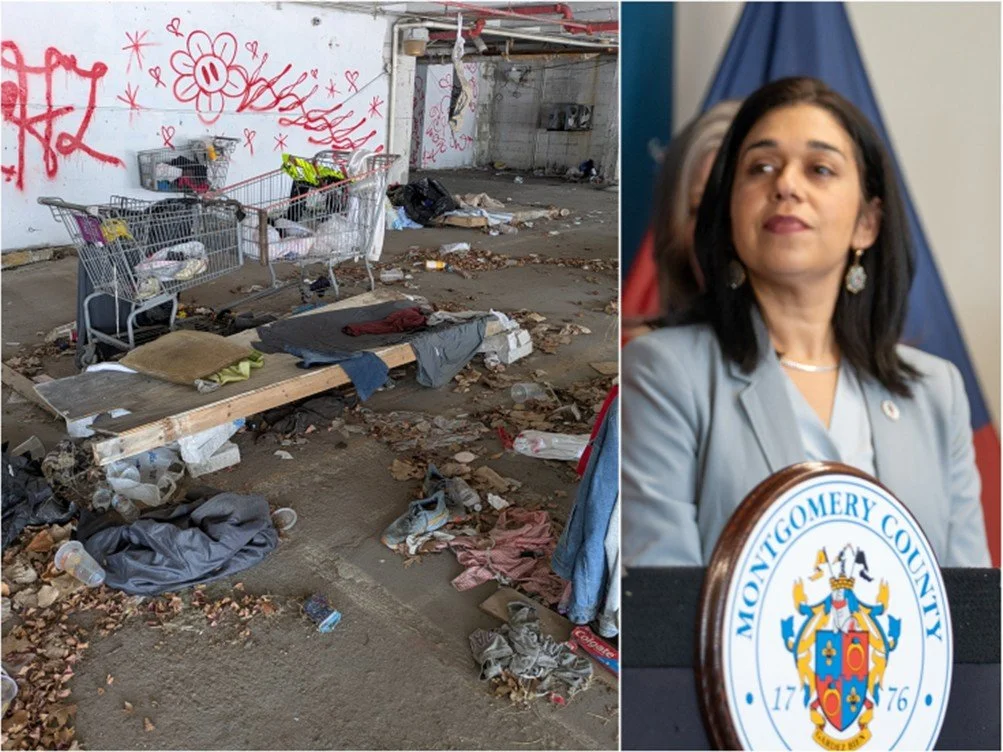
Photo on left: Montgomery Fix. Photo on right: Montgomery County on Flickr
Montgomery County Council President Natali Fani-González responded to a Montgomery Fix report published on February 14, 2026, detailing an underground homeless encampment beneath the former Ambassador Hotel site in Wheaton.
The report, titled "Hidden in Plain Sight: Wheaton’s Underground Homeless Encampment," described a multi-level encampment in the intact underground parking structure of the former Ambassador Apartments at the corner of Veirs Mill Road and University Boulevard. The site is now part of the planned Wheaton Gateway mixed-use redevelopment, which secured approvals in late 2025.
In an email dated Saturday, February 14, 2026, at 8:30 p.m., Fani-González wrote to Montgomery Fix publisher Glenn Fellman:
“Thank you for sending the link of your post. As you may imagine, I’m certainly aware of the critical situation and have been working with our Health and Human Services team to find ways to move these occupants to a safe location. It has been challenging as our shelters are in full capacity.”
Fani-González cited county homelessness data and anticipated future increases:
“As you may know, the January 2025 data showed that the county received a 32% increase in homelessness compared to 2024, I expect the data for 2026 to be much higher; we will get some of that data released during the April operating budget sessions.”
She also invited Fellman to testify during the upcoming budget process:
“Once the operating budget proposal gets released from the County Executive on March 13, I would absolutely appreciate having you come testify on the importance of keeping (or even increasing depending on what the County Executive proposes in March) funding for housing stabilization services. The needs as you can see are huge, and it will get worse under the Trump administration.”
Regarding the specific property, Fani-González wrote:
“As you know, this is the site of the former Ambassador Hotel, an Housing Opportunities Commission property which had to be condemned and demolished years ago. The redevelopment of this site secured approval in late 2025. I know the complete demolition of the structures on site will happen in the upcoming months, ahead of the rest of the construction.”
She added that security measures are in place and will be expanded:
“I am aware that steps have been taken to secure the site, including upgrading the perimeter fencing and frequent site visits, and I know that the property is going to be adding additional security measures to improve security as they prepare for the upcoming demolition.”
Fani-González also stated that coordination is underway to prevent displacement without shelter:
“I have connected the property owners with HHS to ensure the individuals there are placed in a shelter and not simply move to the streets once the demolition takes place.”
Addressing the broader homelessness crisis, Fani-González wrote:
“We are doing as much as we can with the limited resources as homelessness increases across the region, particularly in Montgomery County. More households are struggling to make ends meet. Rent is too expensive, wages are too low and not keeping up with inflation, and we have seen decades of failed housing policies that I am personally doing my best to fix (ie more homes for people of all income levels, conversions of at least half-empty buildings into housing with affordable housing requirements, etc), job trainings with WorkSource Montgomery, Montgomery College, etc.”
She emphasized opposition to criminalization:
“As I advocate for more funds to alleviate the current crisis with our homeless community, advocating to give people more opportunities to have higher paying jobs as well as building more housing options for all income levels, and not trying to arrest our way out of homelessness, is vital. Arresting or punishing people experiencing homelessness makes things worse. The real solution is providing access to housing we all can afford and the support services we all need to become stable.”
The Council President concluded her message by thanking Fellman for his “continued advocacy.”