Where Policy Falters: MoCo’s Encampment Problem
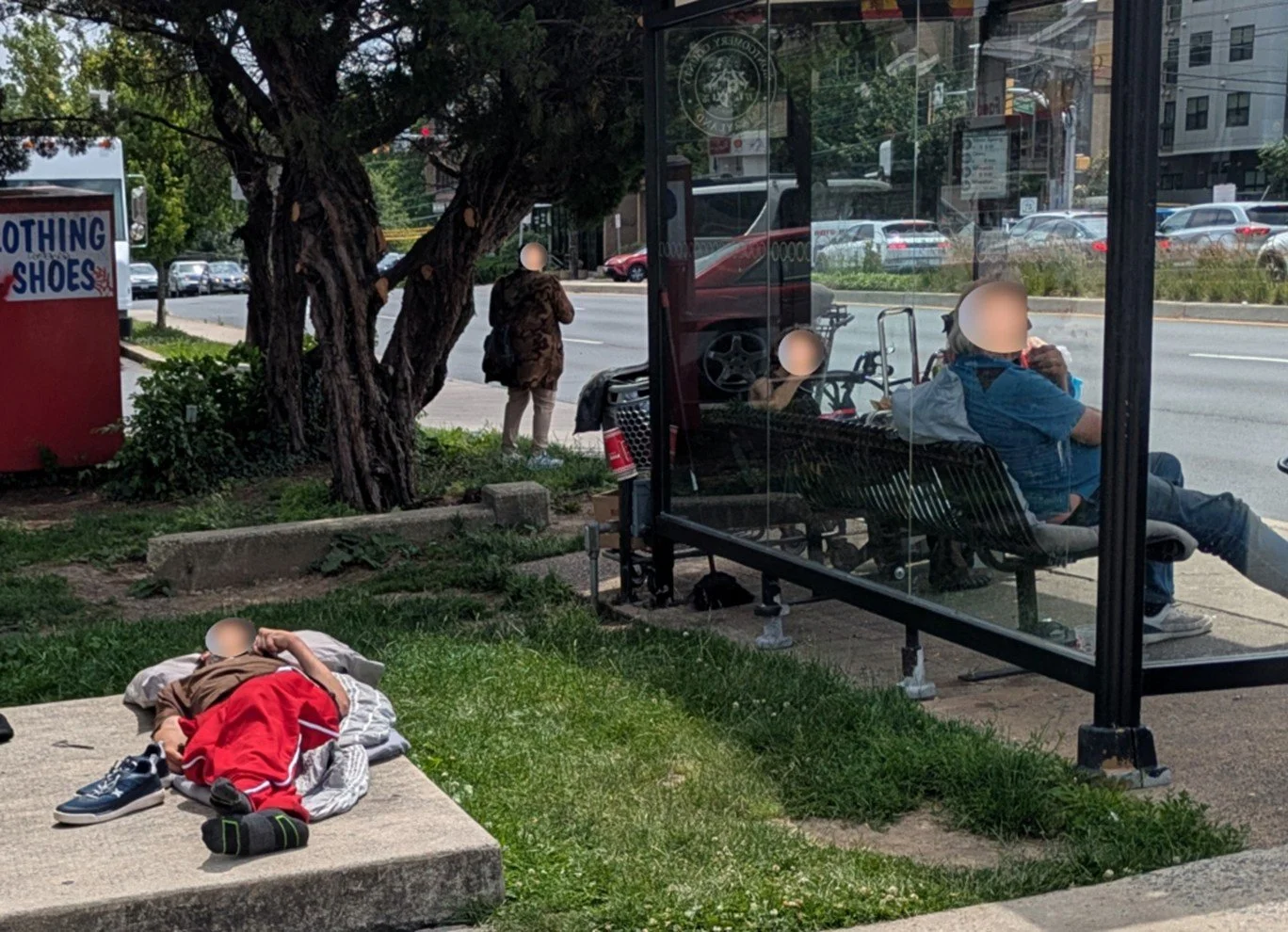
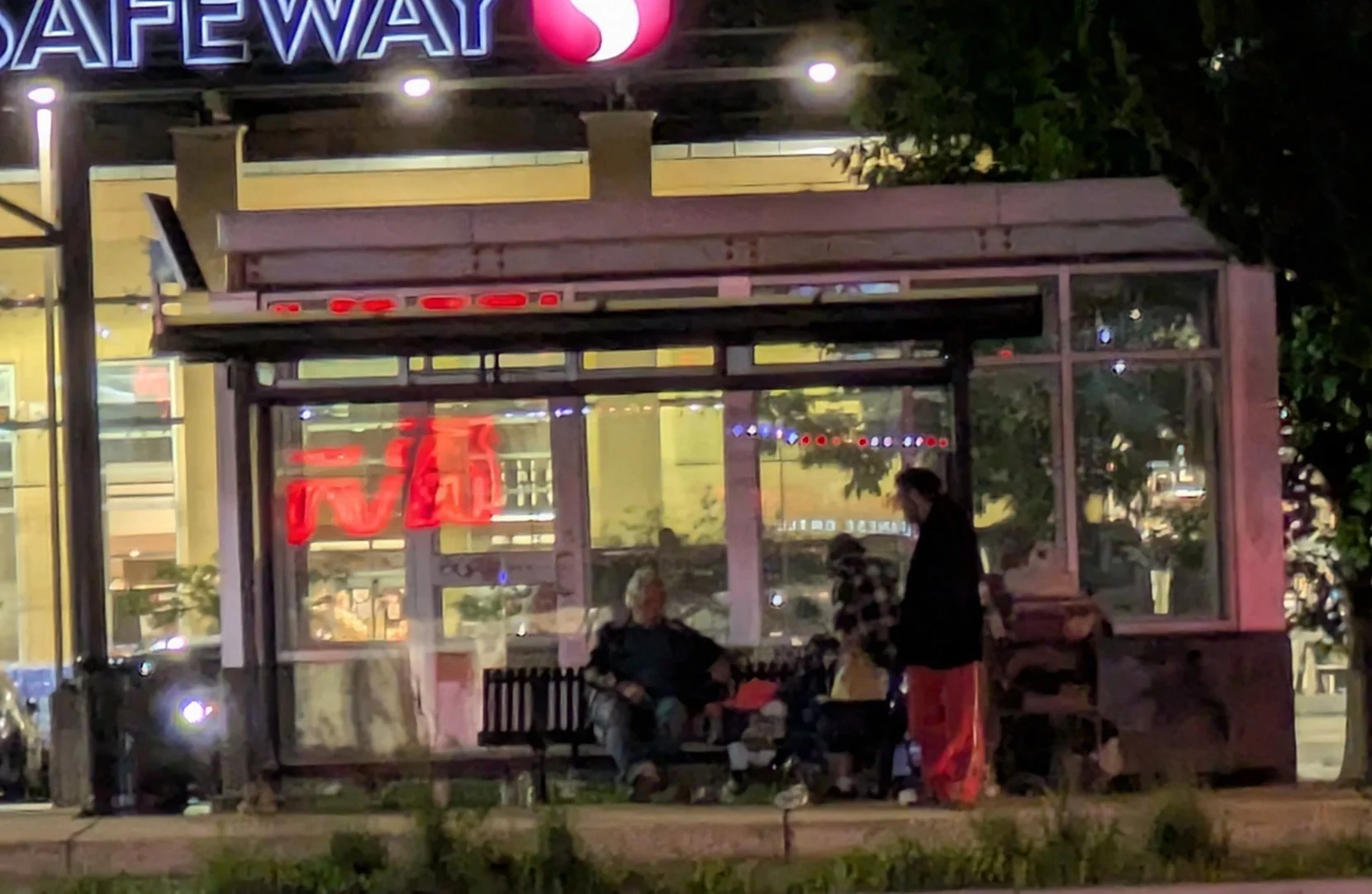
In front of the Safeway on Connecticut Avenue in Kensington, MD, a homeless group with two elderly adults, a disabled adult, and occasionally a few others, has spent the better part of six months living in a Metro bus stop. Thousands of cars drive by every day.
(Photo: Montgomery Fix)
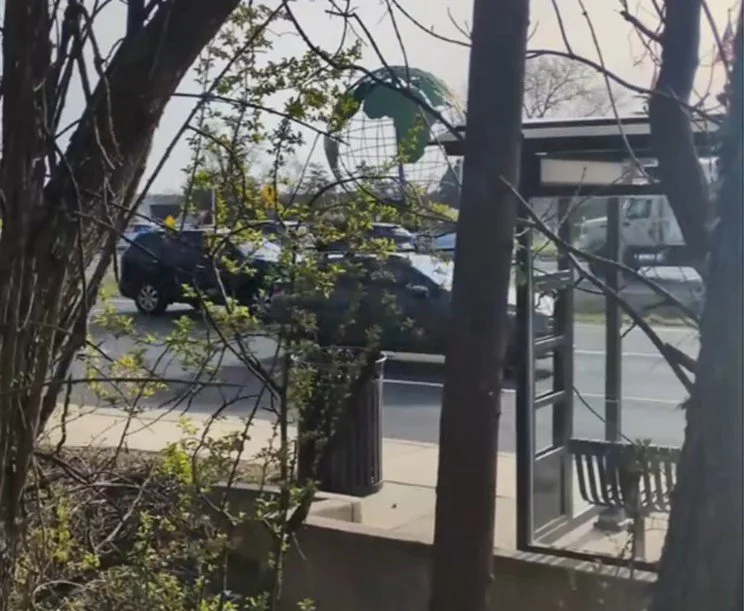
Across the street from Leisure World on Georgia Avenue, a homeless man with suspected substance use disorder has been living in the bushes a few feet behind a bus shelter since the bitter cold days of January. Local seniors are afraid to go there.
(Photo: Montgomery Fix)
The ongoing habitation of these public spaces exemplifies a weak spot in Montgomery County's homeless policy, a strategy that accomplishes amazing results when it works, but which can fail both communities and the vulnerable people it aims to protect when it doesn’t. This article explores county policy in the context of the ongoing situations in Kensington and near Leisure World, exposing how the strategy can leave neighborhoods feeling unsafe and unheard, and elderly, disabled individuals living on sidewalks indefinitely.
Understanding County Policy
Montgomery County approaches the challenge of homelessness and public encampments through a structured system managed by the local government. Earlier this year, we sat down with Dr. Christine Hong, Chief of Services to End and Prevent Homelessness (SEPH) within the Montgomery County Department of Health and Human Services, to learn how the system works.
As Dr. Christine Hong explained, "The County operates and leads the Services to End and Prevent Homelessness with what's called a Continuum of Care." This system provides "a range of services from prevention to housing as well as health care for the homeless that helps to address the needs of people who are experiencing housing instability." When managing individuals living unsheltered or in public spaces, the county adheres to a "housing-first model," prioritizing immediate access to stable housing solutions rather than forcing individuals to meet prerequisites before receiving shelter.
To identify and assist individuals inhabiting public spaces, Montgomery County relies heavily on proactive field engagement rather than reactive law enforcement. Dr. Hong notes, "We have four Outreach Partners who proactively do outreach across the county's 500 square miles." These dedicated teams focus entirely on direct contact. "They are out canvassing people who are outside; that's their sole purpose: to engage people who are sleeping outside because we don't want them outside." Crucially, the county explicitly rejects punitive measures for simply being unhoused, with Dr. Hong explaining, "Montgomery County is not a jurisdiction that criminalizes people who are sleeping outside, meaning they don't get citations just for sleeping outside." The county does not criminalize basic human necessities like urinating or defecating. Activities that wouldn't get a housed person arrested in the privacy of their home, such as drinking alcohol, using drugs, or having consensual sex, are also not criminalized when they take place in encampments on public land.
The philosophical foundation of this strategy is rooted in empathy and psychological awareness, recognizing that individuals in encampments often face profound vulnerabilities, severe mental illness, substance use disorder, or past trauma. According to Dr. Hong, "We follow a trauma-informed care approach because we know that most of the people we are serving have a history of trauma." Because of these past experiences, individuals may initially decline assistance or traditional group shelter environments. Consequently, county policies dictate a patient, relationship-driven approach where "for us, our role is to focus on the human being," and "our goal is to engage and build trust and connect them to any resources they need."
When encampments begin to impact public safety or obstruct community spaces, such as bus shelters, the county says it initiates a highly coordinated, multi-agency intervention. "Every single encampment situation, we're usually bringing in three or four other departments or entities," Dr. Hong explains. SEPH regularly coordinates with partners like the Department of Transportation, the Department of General Services, the Department of Environmental Protection, and law enforcement to address public concerns. This collaborative methodology is designed to persuade individuals to relocate voluntarily by pairing structural adjustments with consistent service offers. However, the county emphasizes that sustainable outcomes require patience, as Dr. Hong highlights, "It isn't something that happens overnight. Sometimes the public will say, 'well, I made a complaint, and they're still there’."
The Continuum of Care in Montgomery County is filled with success stories. In the Metropolitan Washington Council of Governments (COG) 2026 Point-in-Time (PIT) count, the county's family homelessness decreased 47% from the previous year. County officials attribute the improvement largely to the Short-Term Housing and Resolution Program (SHaRP), launched in early 2025 to help families move quickly into permanent housing. But other numbers in the PIT count show weaknesses and also help explain why long-term encampments like those in Kensington and near Leisure World have become more common. Individuals experiencing chronic homelessness increased 14% from last year. There was a 16% increase in people ages 55–64 and an 18% rise in people 65 and older.
The Kensington Conundrum
On an afternoon in late May, we visited Kensington to speak with the three people living at the bus stop and with local business owners.
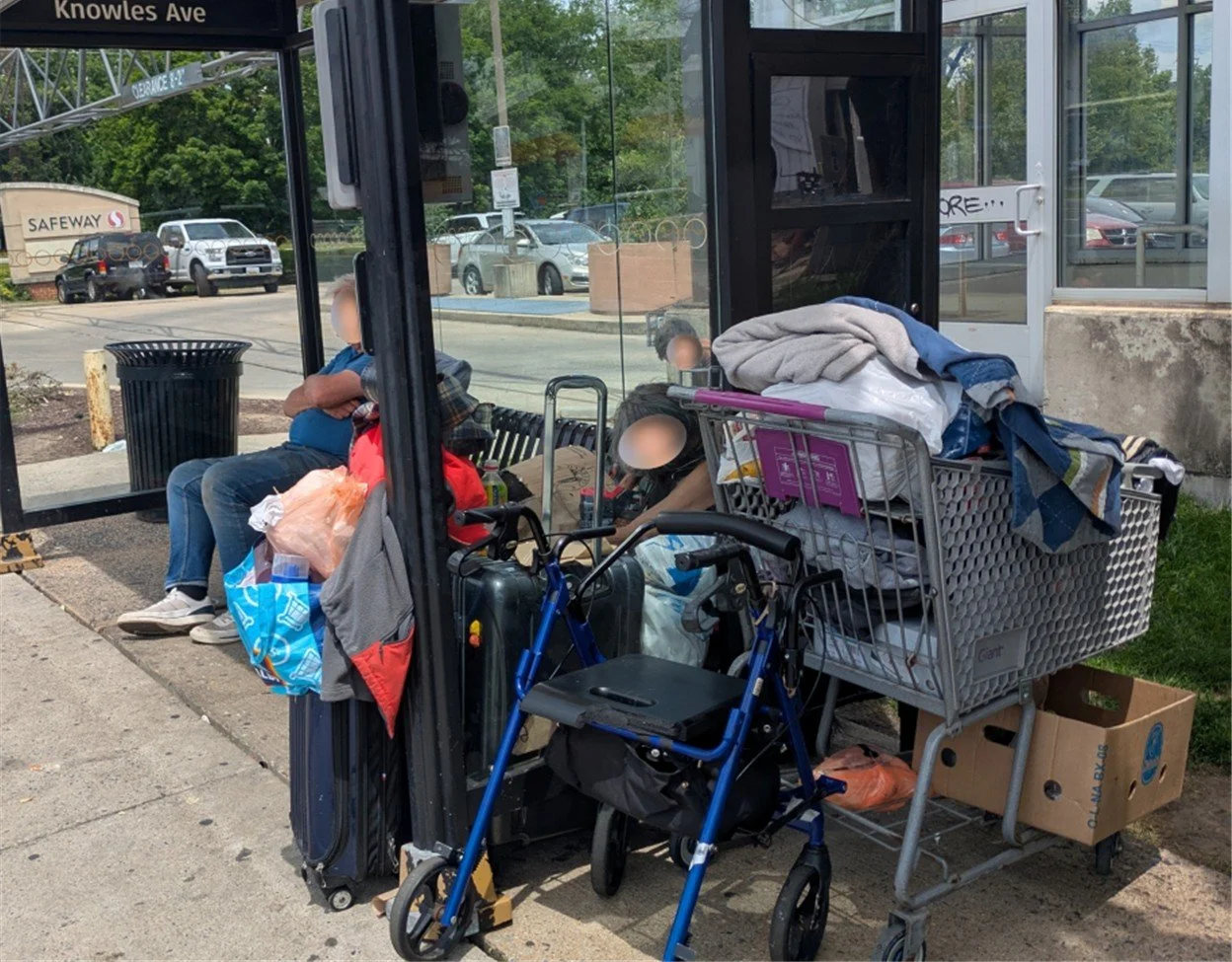
The disabled man, moving unsteady without his walker, dropped blankets and pillows from a borrowed Safeway shopping cart onto a concrete slab behind the bus shelter before taking a controlled flop onto the makeshift bed. A frail, elderly woman with sunbaked skin sat weeping inconsolably on the shelter bench, her hands covering her face. Next to her sat a pile of belongings, including a duffle bag from which a senior man on the other side retrieved a jar of peanut butter and bread. We chatted while he made his sandwich, the slices of crumpled wheat resting on his mud-stained jeans. He readily shared his name, but for the purposes of this record, we refer to him by the pseudonym John.
(Photo: Montgomery Fix)
John claimed they were evicted from Silver Creek Senior Living, a community in a building on Knowles Avenue visible from the bus stop, and chose to stay in the area because "we know people here and it's familiar."
John is a long-time county resident with memories of local happenings that occurred decades ago. He shared that county outreach teams have visited them several times, and they have even accepted shelter on a few occasions, but always returned after a night or short stay. "The shelters are unacceptable," John explained. He also talked about numerous interactions with police, which he considers harassment, relating how a few mornings earlier he awoke before sunrise "to three police cars rolling up on us, lights flashing."
When asked about plans to find permanent shelter, John admitted the situation is unsustainable and said vaguely and unconvincingly that they will have to “find something better.”
Lurking in Leisure World
WMATA bus stop 2000943 sits on southbound Georgia Avenue at the intersection with Rossmoor Boulevard. Rossmoor is the main entrance to Leisure World, a large, age-restricted retirement community with more than 8,000 senior residents. This stop is vital for Leisure World seniors and the thousands of caretakers who work there every day, enabling independent travel to medical appointments, shopping, pharmacies, places of worship, and social activities, and a quick ride to the nearby Glenmont Metro Station.
Reports of a homeless person in the bushes behind stop 2000943 reached Montgomery Fix in February. Residents were worried both for the safety of the man sleeping outdoors in freezing temperatures and for their own safety as they waited for the bus, anxious about the man known to behave erratically and panhandle at the adjacent shopping center. His small encampment is just a few feet away from the bus shelter, partly hidden behind dense bushes and vines.
We have interacted with the man, though not meaningfully, as he asked not to be engaged. Signs of substance use disorder are evident at his encampment and sometimes in his demeanor.
In an April 7 report sent to Councilmember Kristin Mink, whose district includes Leisure World, and copied to Dr. Hong, Montgomery Fix suggested direct intervention, writing, "[we] understand and respect the County’s general policy of not displacing individuals from encampments. However, in this case, the public interest strongly supports immediate intervention; specifically, assisting this individual in relocating to a more appropriate and safer setting, ideally indoors through available County services."
David Hondowicz, Mink's Sr. Legislative Aide, replied the same day. "At Councilmember Mink’s direction, I’m copying her personal lead on HHS matters, Ana Martinez, who will facilitate follow-up as soon as possible," he wrote. That afternoon we were copied on an email from Dr. Hong to Martinez, stating, "We are coordinating with our outreach team to engage this individual."
Nearly two months later, dense green foliage filled in the gaps among the brambles. The encampment remains but is no longer in plain sight. Only a well-worn path behind the bus shelter exposes its existence. But the Leisure World residents and their caretakers know it is there. They see the inhabitant panhandling at the shopping center, and he occasionally lies on the bus stop bench. Not being able to know whether he is just feet away from the bus shelter bench only raises their anxiety about using the stop.
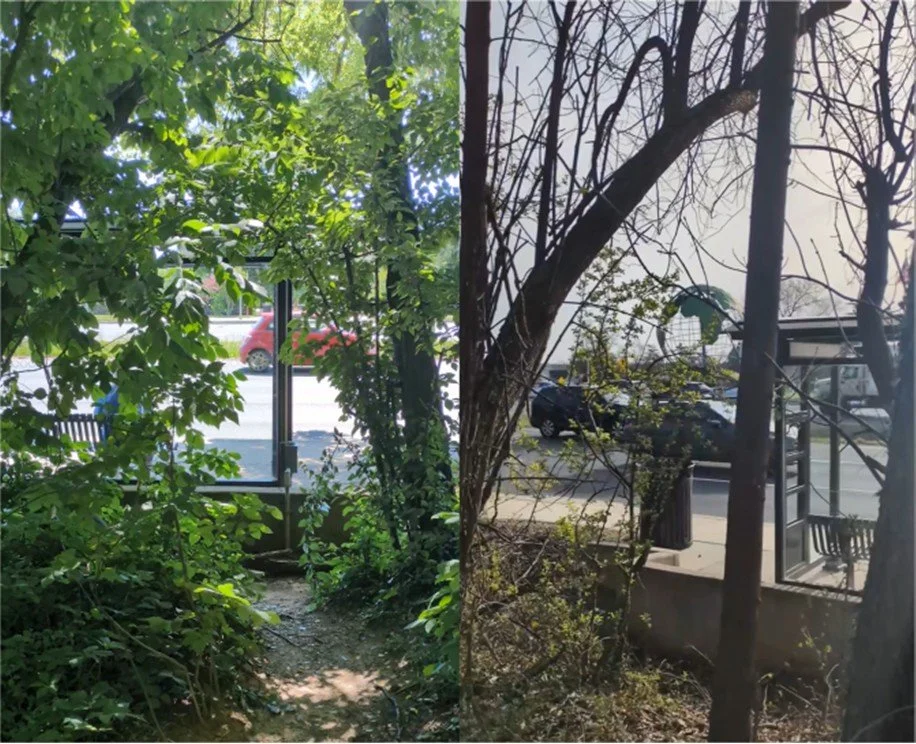
View from the Leisure World encampment. Left May 2026, Right March 2026. (Photos: Montgomery Fix)
Desperate Communities
The stench of urine and feces is overpowering around the Connecticut Avenue bus stop in Kensington. Shopping carts full of belongings rest against the side and back glass walls, and litter is scattered all around. The bench is occupied all day and night by the elderly pair and a pile of their belongings. The public no longer uses the bus stop. They stand on the sidewalk several yards away or go to bus stops farther up the street.
The manager of the adjacent Shell Station in Kensington told us the police pull up at the bus stop almost every day, and EMS crews are a common sight too. The station security cameras catch public urination, lighters flashing through the night, and crowds that grow to as many as eight people staying until the wee hours of the morning, occasionally with music playing from a speaker.
We spoke with two long-time Kensington residents, both of whom said they've never seen a situation like this in their quiet town. While homeless individuals and panhandlers are not uncommon, they come and go fairly quickly. A five-month-long encampment in the center of town is something new. Both said they reported the situation to the DHHS, the police, Council district representative Kate Stewart, and/or Town of Kensington officials. The police are responsive but admit there's not much they can do within the County's homelessness policy constraints. Town of Kensington officials say their hands are equally tied. As a small municipality with limited staff and no independent police force, Kensington relies entirely on county-level agencies for enforcement.
Town Manager Matthew J. Hoffman told us in an email that Kensington has "been communicating with Montgomery County and DHHS since March 30" about the bus stop encampment. He shared, "The Town has no jurisdiction over the bus shelter, and Connecticut Avenue is a State road within the State's right-of-way."
Hoffman also shared an update he received from DHHS on June 3, 2026:
“County staff, Crisis Center and partner agencies have been actively engaged with the individuals involved and continue to explore available resources and service options. This is a complex situation that requires coordination among multiple partners and must balance individual rights, service engagement, public safety, and community concerns... With respect to timeline, these situations can vary significantly depending on an individual's willingness to engage with services and accept available assistance. Unlike some other circumstances, there is no prescribed timeline that requires an individual to accept services or relocate if they are legally present in a public space and do not meet criteria for involuntary intervention. As a result, progress is often dependent on continued engagement, relationship-building, and voluntary acceptance of available resources.”
In other words, the Town of Kensington will have to wait until the homeless camped out in the bus shelter decide to leave of their own free will. And this, we believe, is where county policy fails county citizens.
Reclaiming Space Requires a Policy Shift
There has to be a limit. Nobody should be permitted to take over a Metro bus stop on a major commuter route for half a year. No community should endure its Main Street reeking of excrement for six months. And it cannot be acceptable policy if it allows disabled senior citizens to live on a metal bench through three seasons.
By allowing individuals to remain in squalor indefinitely, the county’s passive approach morphs from empathy into institutional abandonment disguised as autonomy. The solution lies in following a compassionate line, offering real solutions, and forcing a choice to be made. The compassion includes medical, mental health, case management, and basic needs assistance. The real solutions range from homeless shelters and motel rooms to rental apartments. These resources already exist and are fully funded in the county budget. More shelter beds are needed, but that is no justification for an indefinite street presence.
Montgomery County should adopt a clear encampment resolution policy built on two principles: compassion for individuals experiencing homelessness and a commitment to keeping public spaces accessible, safe, and available for their intended use. The County should continue on the basis that homelessness is fundamentally a housing and human services challenge, not a criminal justice issue. At the same time, public spaces cannot be occupied indefinitely. A successful policy must balance both realities.
Under such a policy, the County would begin by identifying an encampment and immediately deploying outreach teams to the site, as it currently does. Rather than treating closure as a surprise event, the County would initiate an intensive outreach period for a limited duration. During that time, outreach workers would make repeated visits, build relationships with residents, and offer shelter placements, transportation, behavioral health services, substance use treatment referrals, veterans' assistance, and help obtaining identification documents and public benefits. The goal would be to ensure that every individual at the site has multiple opportunities to engage with available services before any enforcement action is considered.
At the same time outreach begins, the County would establish a clear timeline for resolution. Written notices would be posted throughout the encampment, advising residents that the location is scheduled for closure on a specific date. The notices would explain the resources available to residents, identify County contacts who can assist with relocation, and describe how personal belongings will be handled. By setting a predictable schedule, the County would provide individuals with time and motivation to make informed decisions and prepare for relocation.
When the closure date arrives, County agencies would conduct a coordinated encampment resolution operation. Outreach workers would remain present throughout the process to provide last-minute assistance and facilitate shelter placements for anyone willing to accept help. Public works crews would begin removing debris, hazardous materials, and abandoned structures. Law enforcement officers would be present primarily to maintain safety and ensure compliance with the closure order, not to criminalize homelessness itself.
Residents would be given a final opportunity to gather their belongings and leave voluntarily. Personal property would be cataloged and stored for a reasonable period so that owners could reclaim it later. Clearly abandoned property, spoiled food, biohazards, contaminated materials, and items posing immediate health or safety risks could be discarded. The County's objective would be to preserve personal property whenever practicable while restoring the site to safe public use.
If an individual refuses to leave after repeated outreach efforts, advance notice, and a final lawful order to vacate, the County would proceed with enforcement. Law enforcement personnel would issue a final directive requiring the individual to leave the property. Individuals who continue to refuse could be cited or arrested under existing laws governing trespass, obstruction, park regulations, or failure to comply with lawful orders. Enforcement would be reserved for situations in which all reasonable opportunities for voluntary compliance have been exhausted. The policy would make clear that the County will not allow a single individual to indefinitely prevent the restoration of public space simply by refusing to move.
Following closure, the County would restore the site to its intended purpose. Debris would be removed, environmental damage repaired, vegetation restored where necessary, and infrastructure repaired. In locations that have experienced repeated encampments, the County could consider additional measures such as landscaping modifications, fencing, enhanced lighting, increased maintenance, or more frequent inspections to discourage reoccupation and maintain the site's availability to the public.
The ultimate goal of the policy would not be to move people from one outdoor location to another. Rather, it would be to pair meaningful outreach and assistance with a clear expectation that public spaces belong to the entire community and cannot be occupied indefinitely.
What's Next for Kensington and Leisure World?
In its June 3 letter to the Town of Kensington, DHHS said, "We have scheduled a case conference on Friday morning [June 5] with the providers and agencies involved in the case to review the most recent developments, discuss available interventions, identify any additional resources, and determine next steps. Our goal is to ensure that all partners are aligned and that every appropriate option has been explored. The family was visited yesterday by multiple partners (Bethesda Cares, APS, Crisis Center, MCPD etc.) to assess the situation and support the family with services."
Just before sunset on Saturday, June 6, we spoke again with the homeless group in Kensington. The elderly woman was in better spirits than on our previous visit, and the senior man was talkative. They confirmed multiple visits by county and outreach personnel and said they had until June 30 to find a place. They claimed the county offered to pay the rent for three months, but the offer would expire at the end of June if nothing suitable was found, and it was up to them to find an available rental and willing landlord. That explanation doesn't add up. Whether it was born of confusion, lack of understanding, or intentional deception is unclear. However, if the county did extend this type of short-term rental subsidy, the approach mirrors a well-documented structural flaw in standard voucher programs. Expecting traumatized, disabled seniors to independently navigate a highly competitive private market and secure a willing landlord without intensive, hands-on housing navigation assistance is a recipe for failure.
While the Kensington group desired shelter, they were picky. The woman refused to consider anything in Gaithersburg or Germantown, where the county houses many families and individuals in motels and rentals. The man insisted they needed a ground floor unit with at least two bedrooms and a full kitchen. Given the ability to remain encamped indefinitely, they were willing to defy the adage about who can be choosers.
(Photo: Montgomery Fix)
As Saturday night turned into Sunday morning, the three regular inhabitants had been joined by three more people. As they loitered, lighter flashes from behind the shelter were visible through its glass walls while people milled around holding beverage containers.
Meanwhile on the same evening over in Leisure World, with a quick thunderstorm having just moved through, the man living in the woods behind the Georgia Avenue bus stop wasn’t around. Hope he might have accepted assistance was muted by a soggy sleeping bag left to dry on a nearby tree branch. He was likely at the shopping center across the street, taking refuge until the storms blew through.
We traded voicemails with Councilmember Mink’s personal lead on HHS matters, Ana Martinez, over the last few days, hoping to get an update. We expect a response similar to what the Town of Kensington heard from DHHS last week: "We are working on it; please be indefinitely patient." If that proves incorrect, we will update this story.
# # #
If you or someone you know is at risk of homelessness or unhoused, or if you wish to report the location of individuals experiencing homelessness, visit Montgomery County Services to End and Prevent Homelessness or call 311.
Publisher’s Note: As a matter of policy and for the safety of everyone, Montgomery Fix does not disclose the location of encampments we investigate. However, we make exceptions for spots plainly visible to passersby or spots that pose an imminent danger to the public or the inhabitants. The cases in Kensington and near Leisure World definitely meet the former; the latter is a matter of opinion.