$4.8M in County Homelessness Funding at Risk
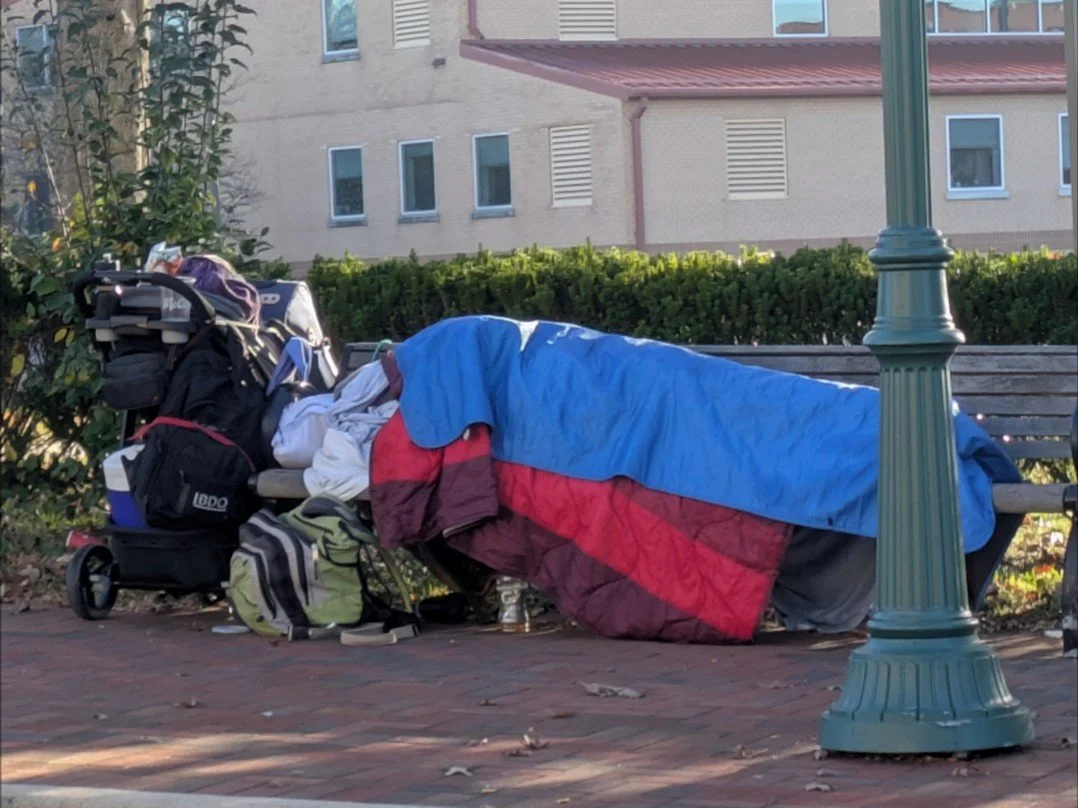
A homeless person sleeps on a bench at the Germantown Commons shopping center, Oct. 24, 2026 (Photo Credit: Montgomery Fix)
Montgomery County could lose nearly $4.8 million in federal homelessness funding as the Trump administration redirects support from permanent housing toward treatment, recovery and transitional programs. The money supports services that reached 532 households and 822 individuals during the past fiscal year. No funding has yet been lost, but county officials are already changing their grant applications, and local taxpayers could be asked to fill the gap if Washington withdraws its support.
The exposure is detailed in an October 13 County Council staff report, forcing leaders to consider the results of years championing the Housing First strategy and answer tough questions. How much of its existing system can it afford to preserve? And do performance outcomes justify preserving every program?
Housing First provides permanent housing without requiring sobriety, treatment or other behavioral conditions beforehand. Supporters argue that stable housing creates the foundation for addressing addiction, mental illness and other obstacles. Montgomery County embraces that philosophy, and its federal funding requests reflect the commitment. Of $11.5 million in fiscal 2024 Continuum of Care awards from the U.S. Department of Housing and Urban Development (HUD), almost $11 million supported permanent supportive housing or rapid rehousing.
The Trump administration wants federal homelessness programs to place greater emphasis on Treatment First approaches, which prioritize physical and mental health services, recovery, employment and public safety. The most significant change is to HUD's annual Continuum of Care grant competition, which sorts projects into two funding tiers. Tier 1 gives locally ranked, eligible projects priority consideration, although funding is not unconditional. Tier 2 includes remaining renewal requests and new projects that must compete more heavily under national criteria. These are funding priorities, not separate categories of services: eligible housing and treatment-related projects can appear in either tier.
Previously, communities could place about 90% of their annual renewal funding in Tier 1. Under the revised rules, that falls to 60%, forcing many established programs into the more competitive Tier 2. HUD has also reserved up to $1.3 billion nationally for new projects, prioritizing transitional housing and supportive services. Permanent supportive housing remains eligible, and Tier 2 placement is not a rejection. Legal challenges to the revised rules are ongoing, leaving award decisions uncertain.
Six Programs Face Greater Risk
The county submitted 17 projects in the latest competition. Eight existing housing projects received at least some Tier 1 priority; six projects, including one partly funded in Tier 1, have requests exposed in Tier 2, accounting for the $4,780,654 at risk:
Montgomery County Coalition for the Homeless — Keys First, $353,258
Pathways to Housing DC — Project Home, $1,372,443
National Center for Children and Families — NCCF RISE, $731,670
Interfaith Works — Transitional Living, $479,074
Interfaith Works — Lon's Transitional Living, $396,669
Bethesda Cares — Street to Work, $1,447,540
Total: $4,780,654
Keys First and Project Home are permanent supportive housing renewals. The other four are seeking to shift to transitional housing or supportive-services models. In other words, providers are already adapting, rather than simply seeking to continue unchanged. The affected programs served 244 children, 202 adults aged 55 or older and 20 veterans among their 822 clients. Those figures measure people served, not people certain to lose housing.
The county's own June funding presentation to outreach organizations discouraged applications for new permanent supportive housing and rapid rehousing programs, favoring transitional housing, behavioral health services and street outreach. Whatever happens to the grants, Washington's policy shift is already changing Montgomery County's approach. Whether official county policy changes as well may be determined in the next round of budget discussions.
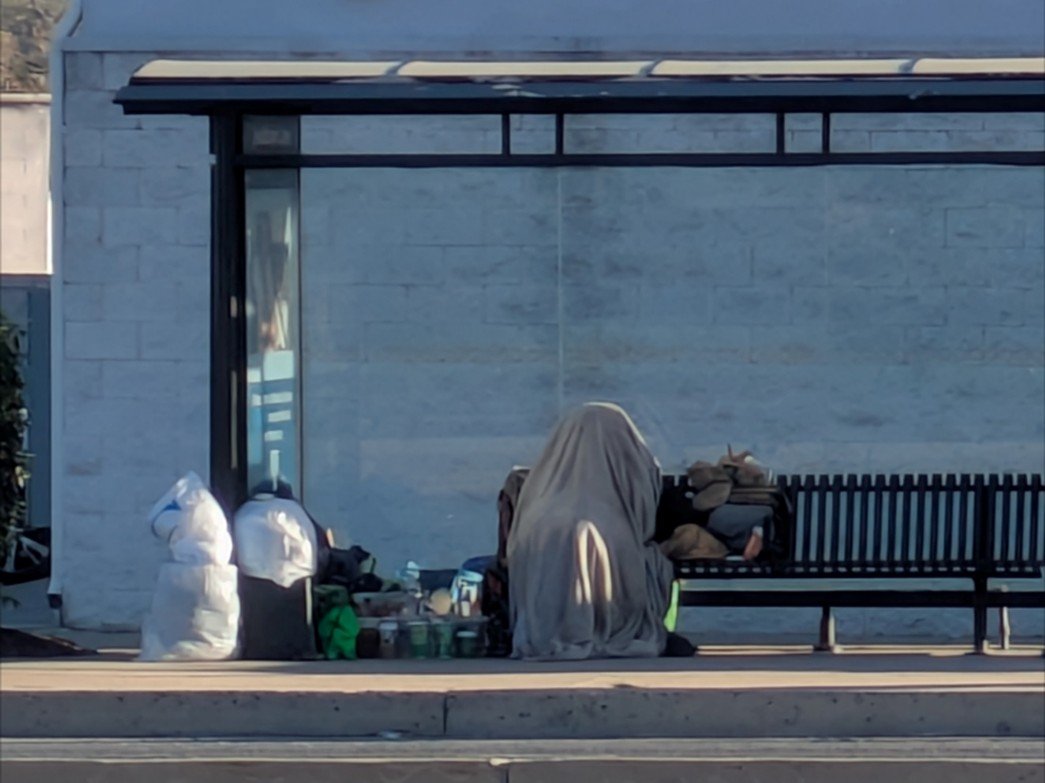
A homeless person sleeps on a bench on East Gude Drive in Rockville, Oct. 24, 2026 (Photo Credit: Montgomery Fix)
The Budget Problem
The Services to End and Prevent Homelessness (SEPH) division of the county's Department of Health and Human Services has a $68.46 million approved fiscal 2027 budget, approximately $6.47 million above the previous year. The $4.78 million at risk is nearly 7% of that budget, and bigger challenges are on the horizon. At an October 15 Council committee discussion, officials described contingency funding for certain grants expiring in fiscal 2027 but not comparable provisions for grants whose next periods begin in fiscal 2028. Other state and federal homelessness funding exists, but none has been identified as a reliable replacement.
Ultimately, where the money comes from may be academic because, if the county doesn't supplement lost federal funding, the human and financial costs could be even more severe, especially in the short term. Year-round shelters averaged 98% occupancy between April and September, leaving little spare capacity if people lose rental assistance. Nonprofits could cut staff, landlords could lose rental income, and residents might need emergency medical care or shelter.
Before a federal grant's expiration becomes a permanent county tax obligation, the Council needs evidence of which programs work, which residents require ongoing subsidies, and where different services might deliver better results.
Are the Results Good Enough?
The county has achievements worth acknowledging. Its February 2026 count identified 1,120 people experiencing homelessness, down from 1,510 the year before, with family homelessness declining approximately 47%. County officials credit much of that improvement to the Short-Term Housing and Resolution Program (SHaRP). They also report strong one-year housing retention among permanent supportive housing participants.
The broader picture is far less reassuring. Homelessness among individual adults, mostly men, remains stubbornly consistent: 748 in 2024, 798 in 2025, and 742 in 2026. Chronic homelessness increased from 107 to 122 between 2025 and 2026, despite the decline overall. The share of adults leaving shelters, outreach or transitional programs for permanent housing fell from 27% in fiscal 2024 to 20% in fiscal 2025.
The county's official outdoor counts are, by its own admission, incomplete snapshots of its unsheltered population. Just 83 people were identified sleeping outside during the February survey, conducted amid extreme cold and ice; county officials acknowledged it surely missed people. A separate three-day outreach count found 174 in June. Neither is a comprehensive accounting of people concealed in wooded camps, vehicles or other hard-to-reach locations.
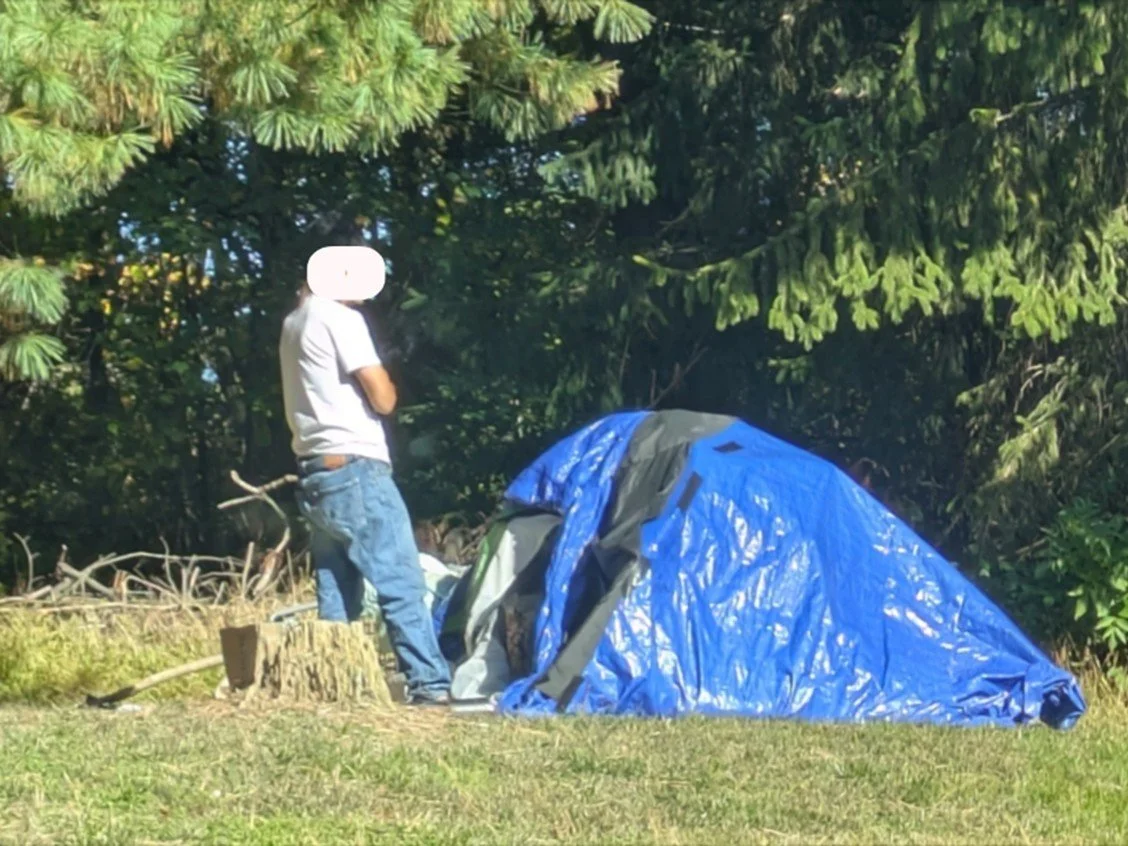
A homeless person’s camp at the Milestone Shopping Center in Germantown, Oct. 24, 2026 (Photo Credit: Montgomery Fix)
What's the Fix?
Montgomery Fix has repeatedly questioned whether the county's dependence on the Housing First model adequately addresses chronic homelessness, untreated mental illness and addiction. We have documented people sleeping on sidewalks and bus benches, along with wooded encampments that persist for months or years despite repeated outreach. Someone pushed out of an apartment by rising rents has different needs from someone living outside with serious psychiatric illness. Both need help, but permanent housing alone may not be the most effective response for both.
Rather than dismiss Treatment First as a Trump administration policy, Montgomery County leaders should examine how other jurisdictions have incorporated treatment and accountability into their Housing First strategies. San Francisco's Proposition F requires certain public assistance recipients with substance use disorders to participate in treatment, while California's CARE Court provides court-supervised treatment plans for individuals with severe mental illness. Miami-Dade County combines Housing First with intensive case management, behavioral health outreach and addiction recovery services. These examples offer different approaches to balancing housing assistance with treatment and personal responsibility, providing Montgomery County with models worth examining as it considers changes to its own programs.
More attention to treatment, recovery and accountability does not mean abruptly removing housing from vulnerable residents. A senior unable to pay rent may need lasting financial assistance; someone battling untreated addiction may need housing combined with intensive clinical care. A Treatment First approach identifies the difference and applies unique strategies tailored to the individual.
Montgomery County needs a public contingency plan identifying which grants could disappear, who would be affected, what alternative services exist, and what local taxpayers might be asked to pay. It also needs an honest assessment of whether permanent housing, treatment, transitional support or some combination best serves different populations. The question is not whether to abandon Housing First or endorse every Trump administration proposal. It is whether county leaders are prepared to examine the results of a system they have invested so heavily in before they must choose between another multimillion-dollar commitment and the loss of services on which hundreds of residents depend.
Getting Answers From DHHS
Readers may have noticed a lack of contribution from DHHS in this piece. Here's why. On September 30, Montgomery Fix asked Dr. Christine Hong, chief of the county's Services to End and Prevent Homelessness division, for assistance identifying existing public grant summaries and assessments of the federal funding changes. Dr. Hong had encouraged us to make such inquiries at a meeting a few months previously. After an October 19 reminder, Dr. Hong responded October 26 without providing the information, referring us instead to DHHS records staff. The department turned a simple request from a journalist into a Maryland Public Information Act request, stating it would need more than 30 additional days to respond.
That response is hard to defend. The county had held a public funding session in June, posted its project rankings in September and provided the Council with a detailed October 13 report containing much of what we sought. Pointing a journalist to those documents should not require two months, a mound of administrative paperwork and attorney reviews. We found sufficient records ourselves; any substantive response from DHHS will be reviewed for future coverage.
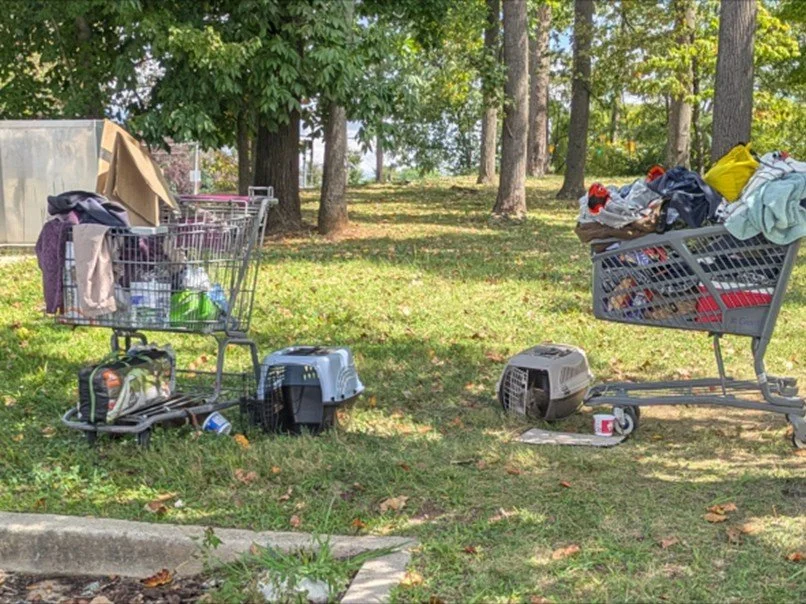
Randolph Road and Parklawn Drive in North Bethesda, Sept. 13, 2026 (Photo Credit: Montgomery Fix)