What Would Governor Moore Say About Rockville’s Flag?
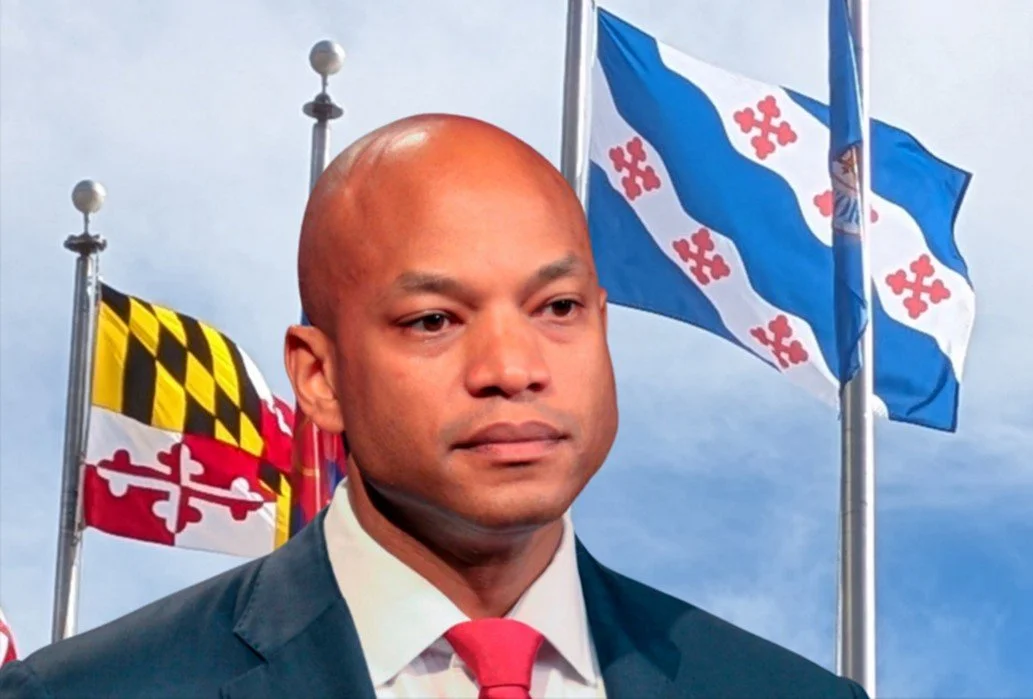
Governor Wes Moore's comments this week about Maryland's revered flag sparked a tsunami of negative backlash. Moore described the state's flag as a “contradiction,” pointing out how it merges the red Crossland bottony, a symbol adopted by Confederate sympathizers during the Civil War, with the black and gold Calvert palys, which were aligned with the Union.
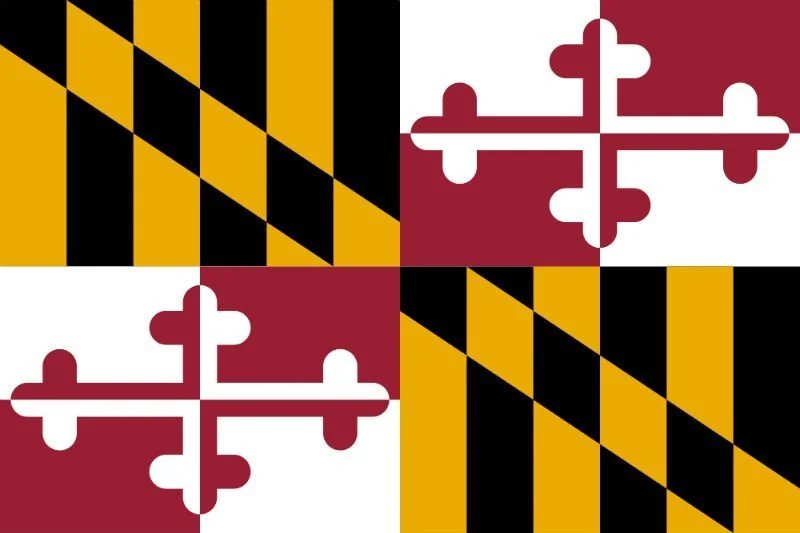
The Maryland flag was first used in the years just after the Civil War and officially adopted by the Maryland General Assembly in 1904
The visceral response from social media to the halls of Annapolis was no surprise. Marylanders love their flag. It is one of the most popular, recognizable, and widely embraced state symbols. Ubiquitous from Cumberland to Caroline, the flag adorns clothing, merchandise, and even tattoos.
Moore didn't let the controversy linger. “Love the flag. Ain’t changing it. Back to work, everyone,” he wrote on his official state social media account Thursday night. His office insists the flag is "undoubtedly the best in the country" and that his comments merely highlighted historical facts, not a call for change.
The Maryland flag, officially adopted in 1904, stands as a deliberate emblem of post-war reunification, intentionally blending symbols of division to promote tolerance and inclusion. The design, as Moore noted, encapsulates Maryland's identity as the “northernmost southern state,” a borderland scarred by some of the war's bloodiest days, where neighbors and even family members stood on opposite sides of the battlefield.
Compare that powerful symbolism to Rockville's flag. Adopted in 1979, it features three wavy blue diagonal stripes symbolizing Rock Creek's waters, interspersed with white stripes adorned by six red bottony crosses pulled straight from the Crossland family shield. The red, white, and blue palette nods to Rockville's accolades as an All-America City, but the bottony crosses neutralize the patriotism. During the Civil War, Marylanders fighting for the Confederacy embraced this exact symbol, the red bottony cross on a white field, as a badge of secessionist honor. It was commonly seen pinned to Confederate uniforms and was the headquarters flag of Confederate General Bradley T. Johnson.
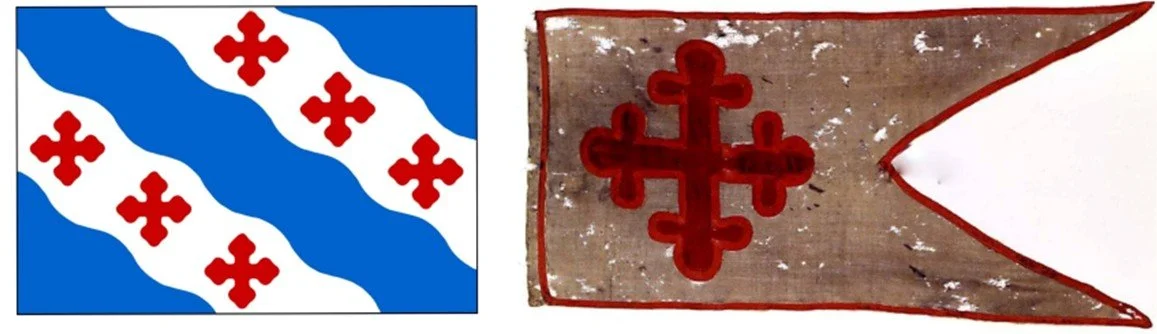
Left: The official flag of the City of Rockville, adopted in 1979. Right: Headquarters flag of Confederate General Bradley T. Johnson
Unlike the Maryland flag, balanced with the Union-associated black-and-gold palys from the Calvert side to signify reconciliation, Rockville's design spotlights the Crossland elements alone, evoking subjugation, segregation, and rebellion.
If Moore views the state flag as a contradiction for its dual symbolism, what might he make of Rockville's? One could reasonably speculate he'd see it as a glaring imbalance, a flag that amplifies the divisive half of Maryland's heritage while sidelining any reconciliatory intent. The city's motto, "Rise Together," rings hollow against a backdrop of symbolism tied to one side, and the wrong side, during an era of unprecedented societal fracture.
Rockville’s leaders know this. The City Council rejected a logo featuring the bottony cross last year due to its Confederate connotations and called for a redesign that better reflects Rockville's inclusive values.
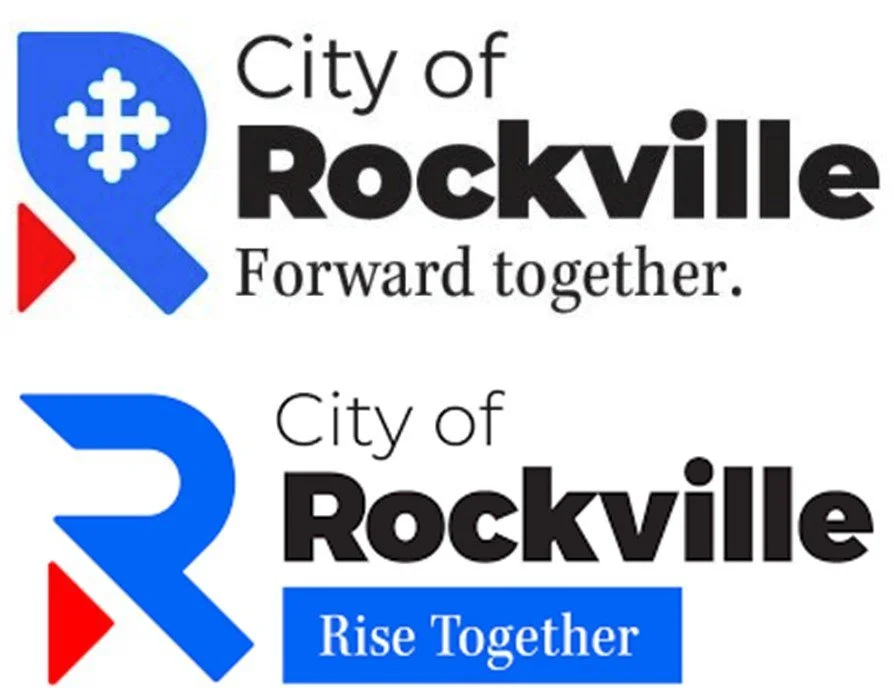
The design on top made it to the final round of focus group recommendations but was rejected by the City Council due to its confederate imagery. The design below was selected instead.
A proposal for a new Rockville flag, submitted last September and discussed in a November City Council agenda, has gained little traction but lingers in the background. At least one Councilmember, Adam Van Grack, is open to the discussion. The others should heed Moore's emphasis on historical awareness and lead Rockville to evolve its symbol into one that truly embodies rising together, much like the state flag's post-war pivot toward unity.
Moore's comments about the state flag show he advocates education over erasure. But given the Rockville flag's lack of balancing elements, might he go further, questioning why a city flag from 1979 clings to symbols that risk alienating residents in one of Maryland's most diverse communities?
Flags aren't just fabric; they're declarations of identity. If Moore's misstep teaches us anything, it is that when symbols are used to visualize our painful past they must be delicately balanced or they risk reopening old wounds.
Rockville, it's time.