Homeless in Our 'Affordable' Backyards
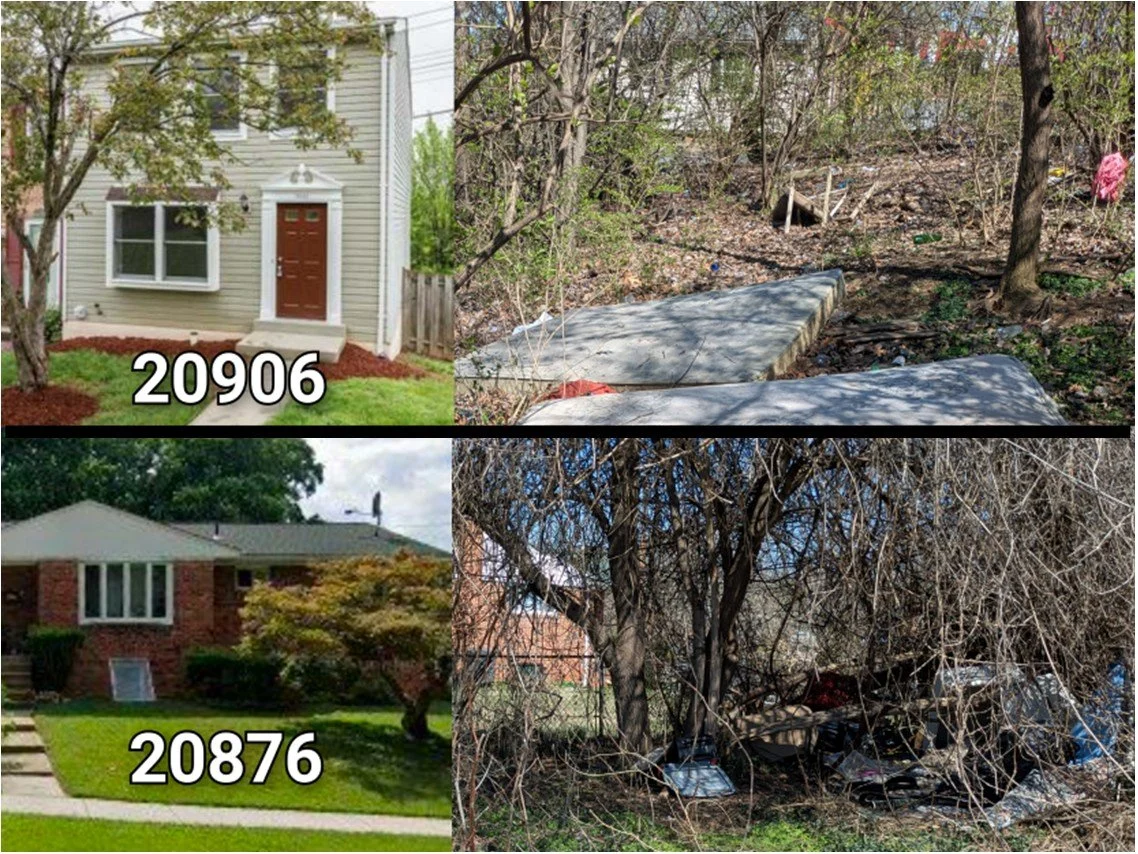
(Photos on left Google Street View, Photos on right Montgomery Fix)
Politicians say the lack of affordable housing is what drove Montgomery County's homeless population to rise more than 30% in 2024. That's partly true. What is also true, and what they don't talk about, is that the crisis is landing hardest in the backyards of the few decent affordable homes we have left.
In our photo and video documentation of encampments in hidden spaces from Silver Spring to Clarksburg, one thing stands out. The "Hidden Spaces" aren't so well hidden in neighborhoods where you actually find workforce housing. They exist in a strip of SHA land triangulating a state road, a retail center, and $385,000 townhouses in Germantown; in the thickets that partially shield a $529,000 home's backyard from a major north-south thoroughfare in Silver Spring; on a sidewalk visible from a $502,000 split level in Twinbrook; behind $1,559 monthly one-bedroom Aspen Hill condos rented for their "gorgeous park views"; and in the woods visible from balconies at one of the last garden apartments in Rockville with two bedrooms for $1,900, and in the woods visible from $1,100 studios in a White Oak high-rise.
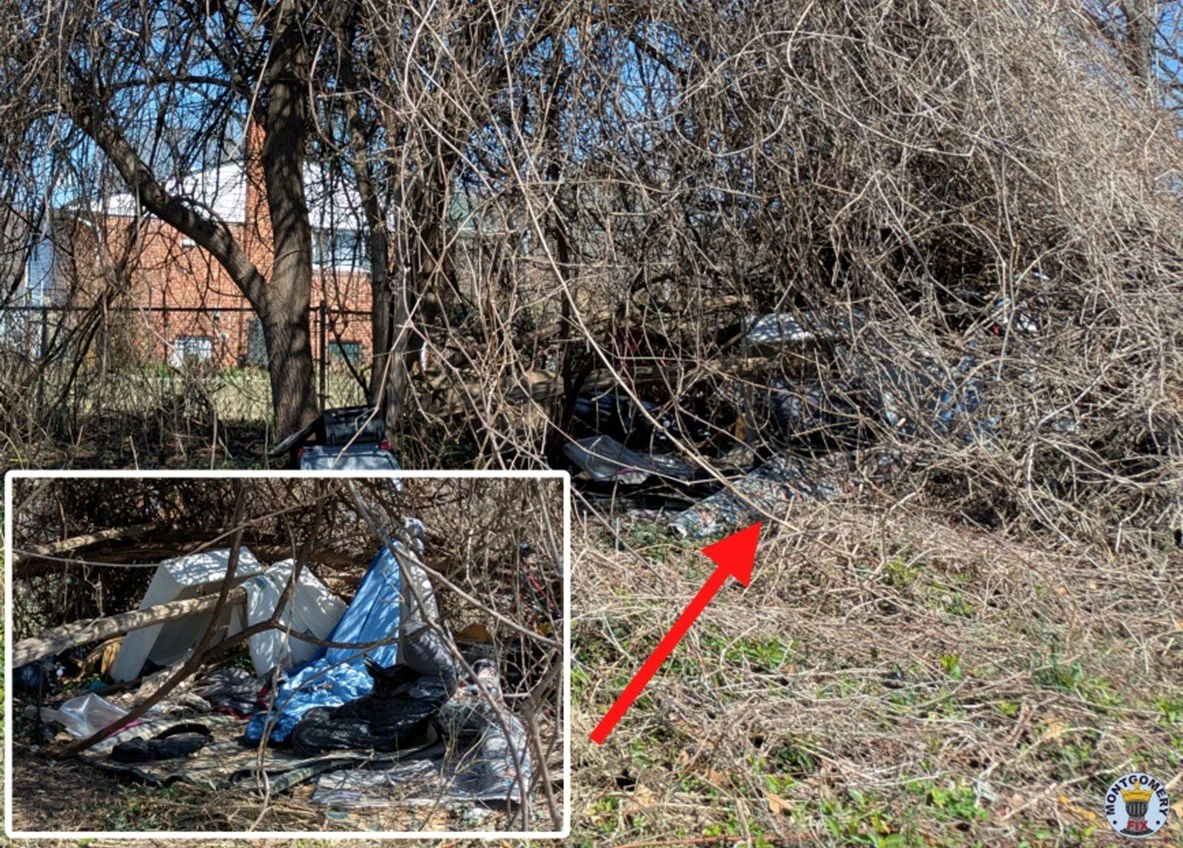
Behind a home in Silver Spring (Photos: Montgomery Fix)
It is no shocker that Montgomery County's most "affordable" homes aren't found in Travilah or Garrett Park or the Kentlands. It is also no shocker that you won't find any homeless encampments there either.
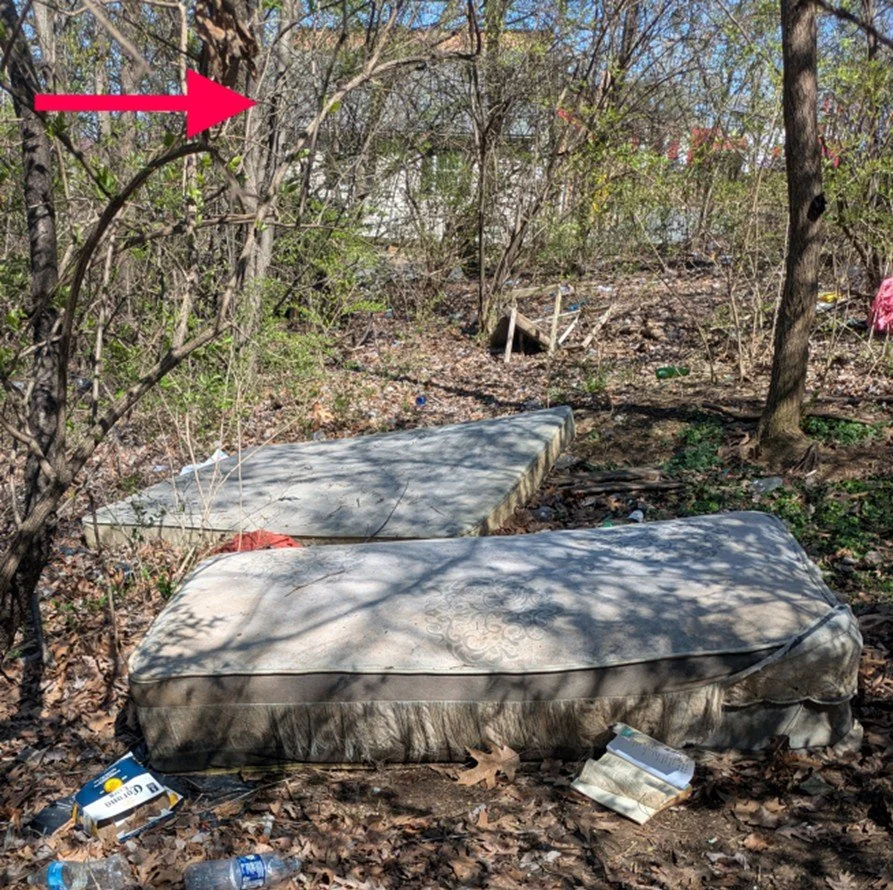
Behind a home in Germantown (Photo: Montgomery Fix)
What happens when affordable and undesirable collide? Some people buy or rent homes outside their means, left juggling past-due bills paycheck to paycheck and never saving a dime. Others opt for nicer surroundings for less money in Frederick or Prince George's. Meanwhile property values decline, apathy builds, and encampments grow within Montgomery's "workforce" communities, fueled by the untreated mental illness and addiction that keep pushing more people onto the streets while politicians and candidates pretend it is all just a supply problem.
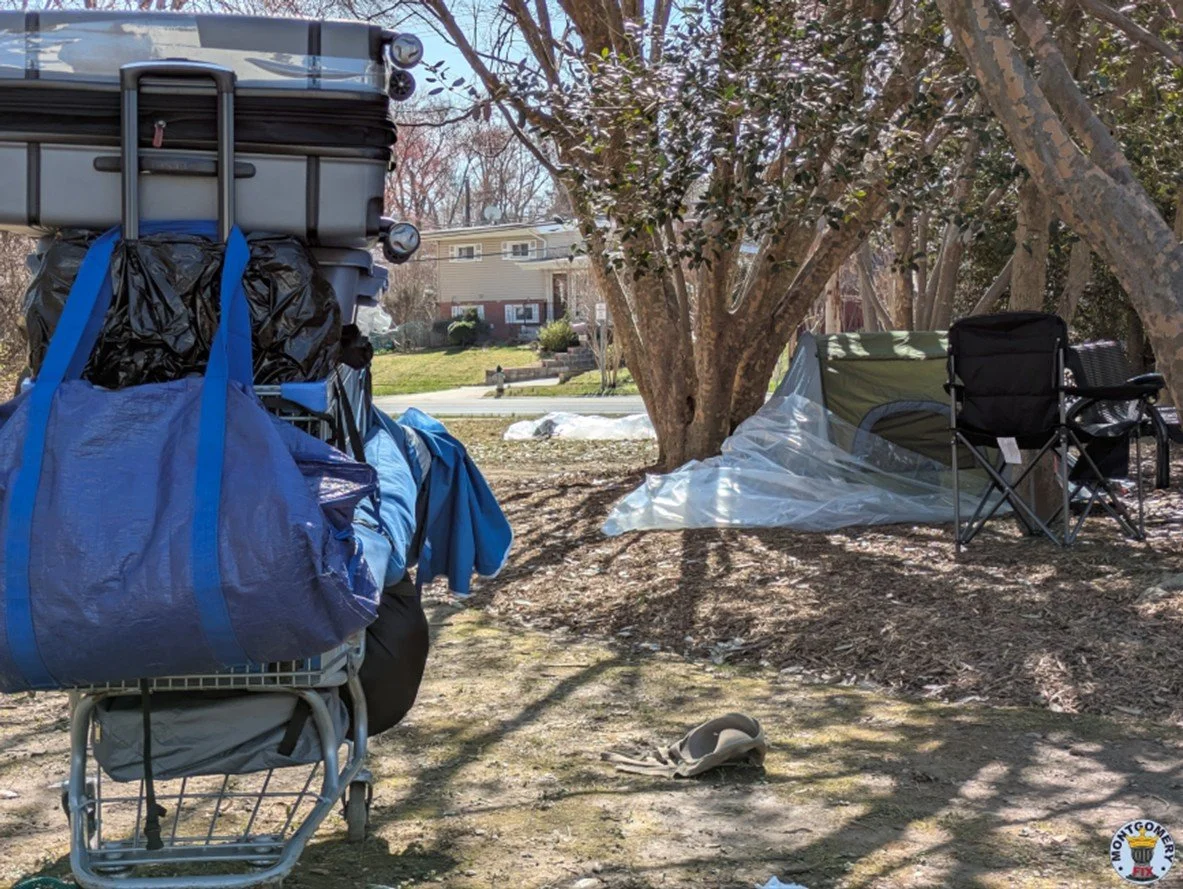
Next to sidewalk in Twinbrook (Photo: Montgomery Fix)
Local leaders say building more affordable housing is the solution but cannot figure out how to get it built. Meantime we have existing stock but increasingly just in places people no longer feel safe raising their families. Public funds used to improve hidden spaces on county- and state-owned land adjacent to affordable neighborhoods in places like Glenmont and Germantown makes a lot more sense than public funds used to entice a builder to construct affordable housing next to the Bethesda Metro. Pair that cleanup with real enforcement and treatment programs that actually get people off the streets, and we would stop kicking the can into the same backyards. Montgomery County's workforce does not want and cannot afford $9 Bethesda lattes.