How Rockville Is Like Mardelva
ANNAPOLIS, Md. - During the debate over Maryland's congressional districts this week, Delegate Tom Hutchinson introduced an amendment proposing an Eastern Shore secession referendum by waving a large flag of the fictional breakaway state of “Mardelva.” The flag features the red and white cross bottony panel from the state flag with a blue crab silhouette overlay. According to Mardelva.com, the heraldic cross, “came to represent the independent people of our region who sided with the Confederacy during the American Civil War.”
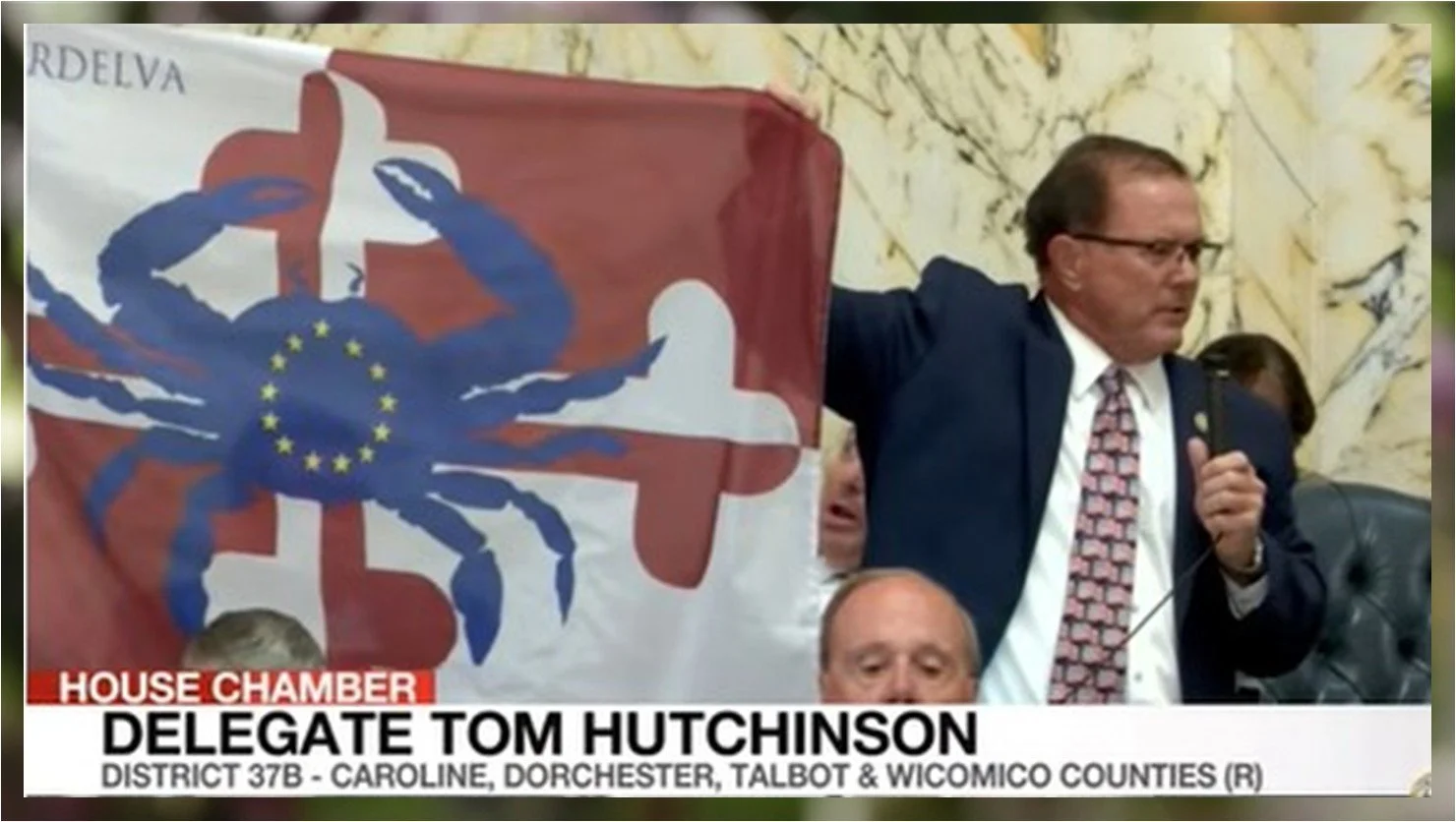
Screenshot from The Baltimore Sun on X
Let that sink in. A Maryland delegate used a Confederate symbol to introduce an amendment on the House floor in Annapolis. Whether it was political theater to spotlight the issue of Eastern Shore residents’ growing sense of disenfranchisement or a legitimate call to break away, Hutchinson put a long-standing vexillological controversy back into the public consciousness.
With just one exception, anywhere else in Maryland where you find red and white crosses bottony in official symbols, you also find black and yellow vertical stripes of equal width, known as a paly. The two symbols came together in the 1620s when George Calvert commissioned a new coat of arms that was later adopted by his son, Cecil Calvert, as the Maryland seal. The combined symbols remained united until the Civil War, when Maryland natives serving in the Confederacy took the red-and-white cross bottony and its associated red-and-white colors as their mark.
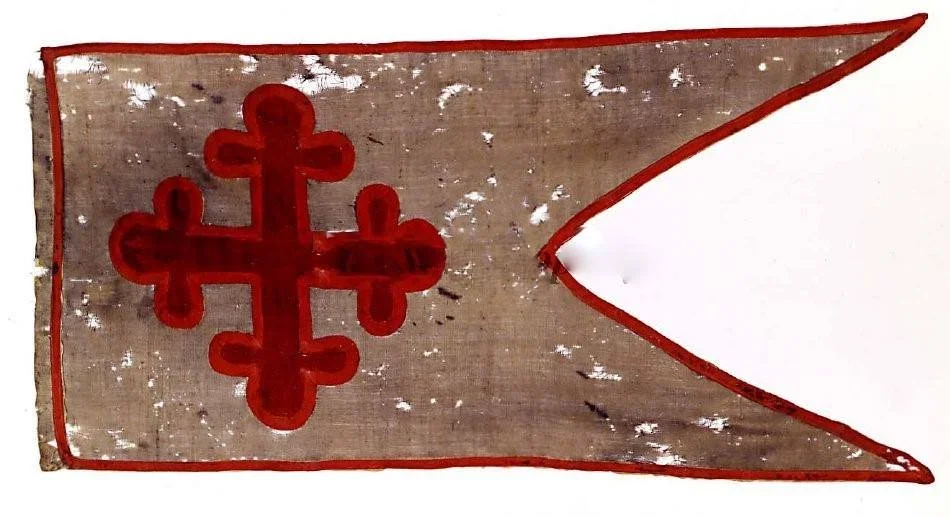
Headquarters flag (guidon) of the Maryland Line, commanded by Brigadier General Bradley T. Johnson. The flag is in the collection of the American Civil War Museum, Richmond, Virginia. Credit: American Civil War Museum
The Mardelva banner bears a striking similarity to the historic command flag used by Maryland-born Confederate General Bradley T. Johnson, minus the crab. Johnson commanded the Maryland Line in opposition to the Union, and famously led his troops under a guidon featuring a red cross bottony positioned squarely upon a white field. The symbol was an explicit emblem of secession, and Confederate soldiers from Maryland wore pins bearing the cross bottony on their uniforms to signify their rebellion.
In 1904, forty years after the war, Maryland codified its iconic state flag. The design was intentionally created as a gesture of post-war civic reconciliation, deliberately marrying the Union-aligned gold and black stripes with the Confederate-associated red crosses bottony to symbolize a restored and harmonious state.
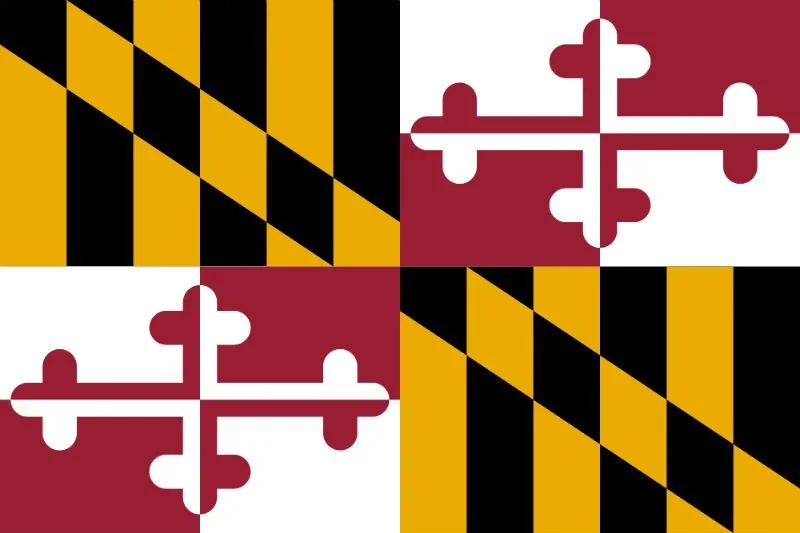
Maryland flag, adopted 1904
In a 2018 Baltimore Magazine article about the Maryland flag and the red cross bottony in Confederate symbolism, Morgan State University associate professor Lawrence Brown said that the crosses bottony “are directly linked to racist policies put in place in the past—in fact, they were part of the animating effort that built support for those policies—many of which still exist today.”
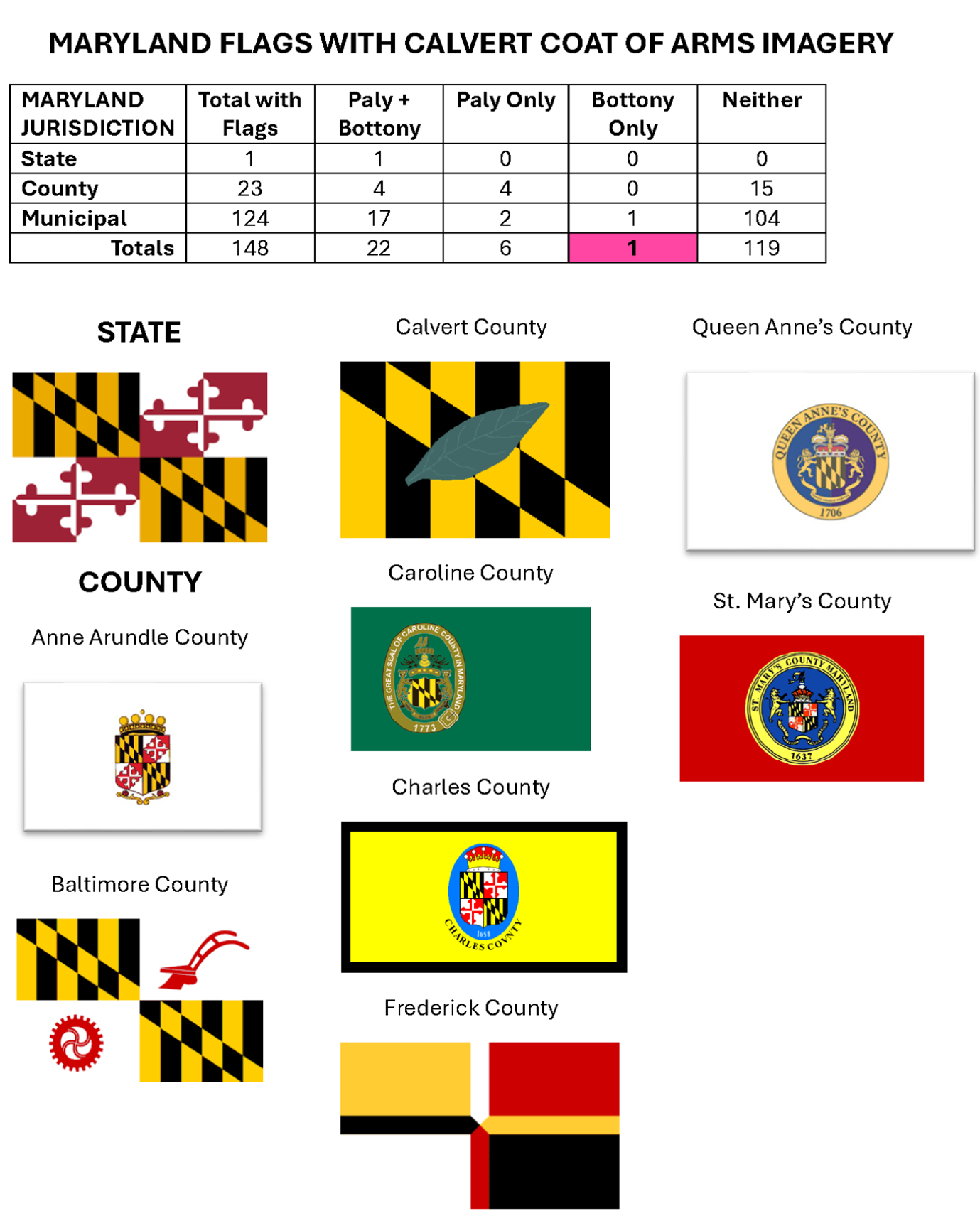
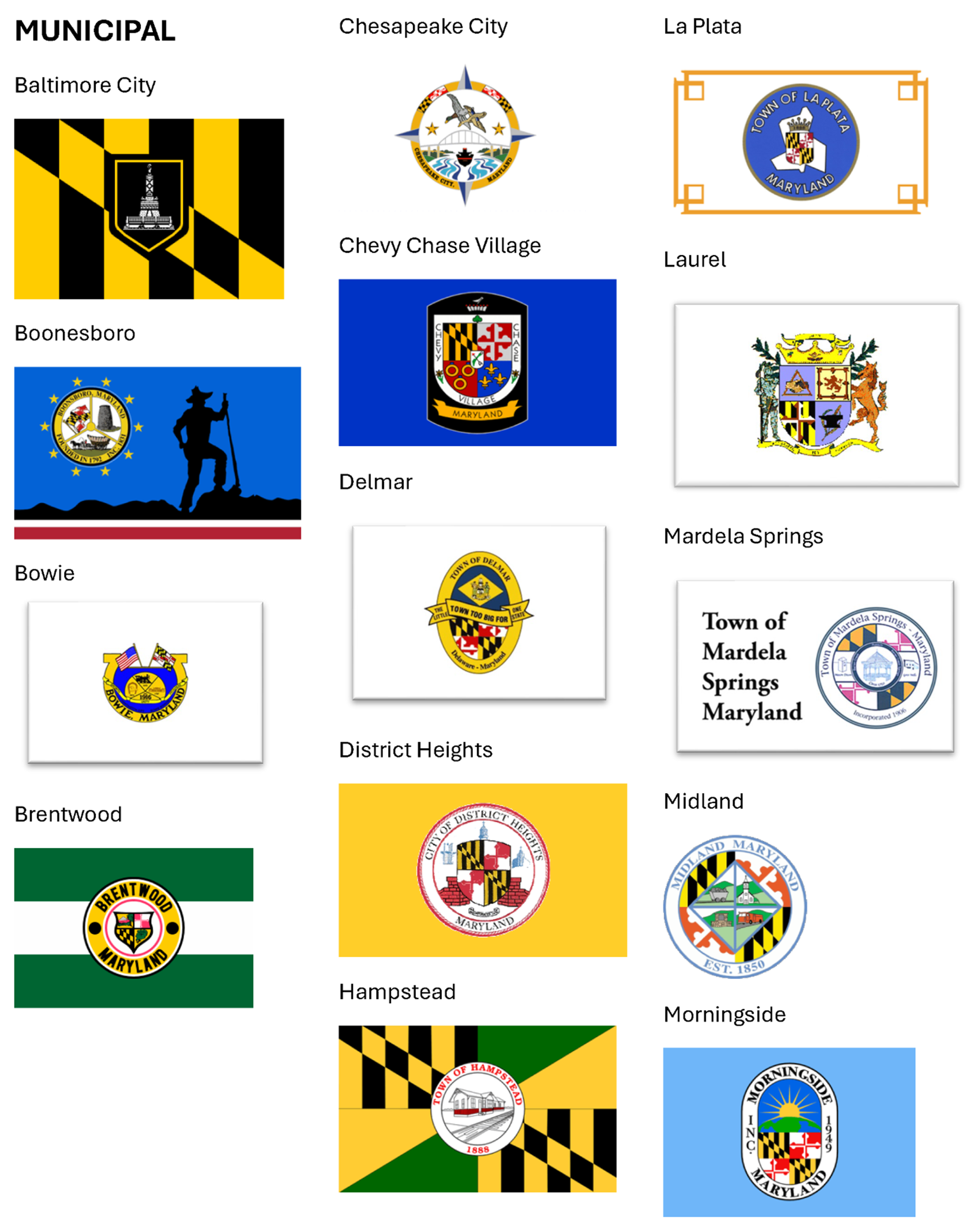
In the state of Maryland, there are 148 counties and municipalities with official flags. Twenty-two of them incorporate both the cross bottony and the paly stripes. Six use only the paly stripe. Since Maryland adopted its unified flag more than 100 years ago, only two places have had flags featuring the red cross bottony on a white field without its balancing counterpart. One was Howard County, but they dropped it in July 2025 in favor of a flag County Executive Calvin Ball said, “reflects our county’s vibrancy and diversity, [and] is a perfect blend of our past, present, and future.” The other is Rockville.
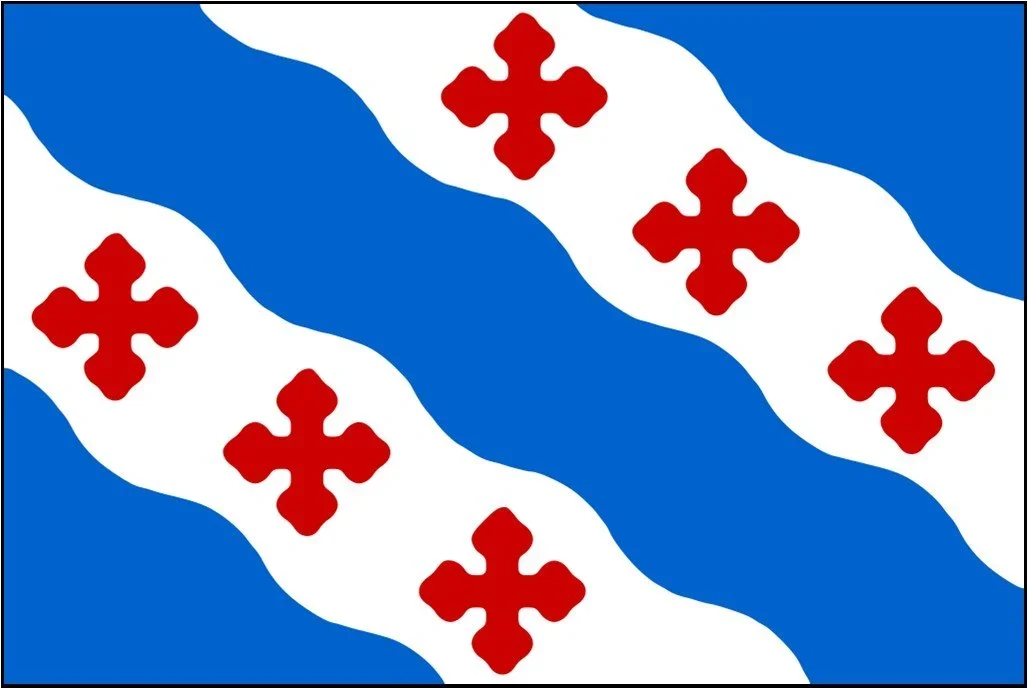
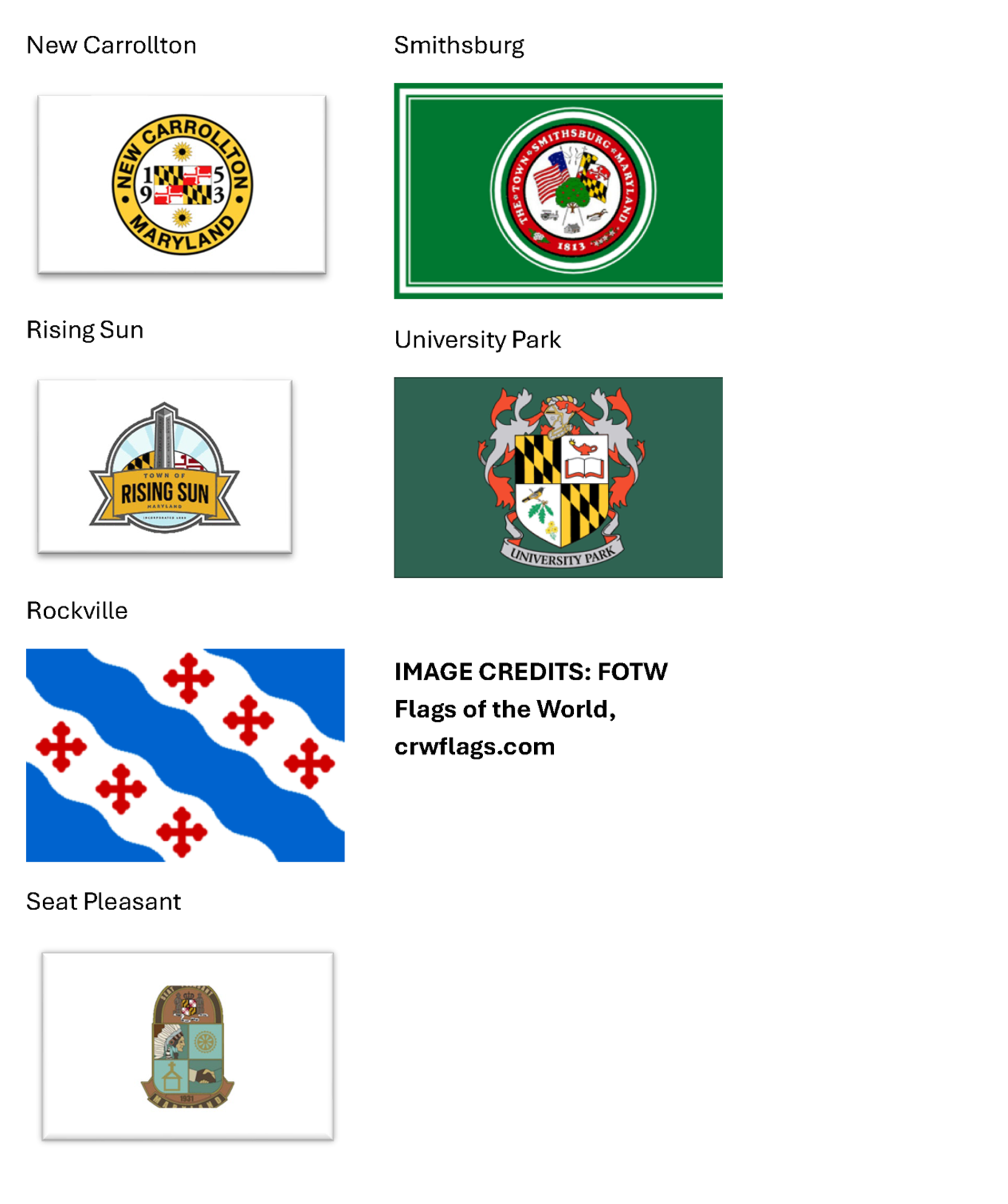
City of Rockville flag, adopted 1979.
The Rockville flag stands alone as the only flag, other than Mardelva’s, that features only the red cross bottony on a white field without its balancing counterpart. No other place has a flag like this because, in Maryland's regional context, that symbol has come to represent subjugation, segregation, and secession. It is the antithesis of Rockville’s official motto, “Rise Together.” Adopted in 1979 under the explanation that its red crosses bottony and blue wavy lines celebrated colonial lineage and All-America City accolades, the Rockville banner omits the balancing black and gold paly stripes that appear on the city's own official seal. By isolating six red crosses bottony within broad white diagonal fields, Rockville’s municipal flag visually mirrors the battle standards of nineteenth-century secessionists.
Detractors who dismiss critiques of the Rockville and Mardelva flags as manifestations of modern ideological censorship or who insist that the cross bottony represents an ancient heraldic motif predating the American Civil War willfully ignore how symbols acquire regional meaning through historical use. Although the cross bottony has benign medieval origins in Europe, its specific deployment in Maryland remains inextricably bound to the defense of human bondage and armed rebellion against the United States. The Rockville City Council implicitly acknowledged this troubling provenance during its recent branding initiative, when elected officials rightly rejected a proposed city logo because it contained the cross bottony, opting instead for a modern visual identity. It remains a baffling contradiction that a symbol deemed too historically compromised for a city letterhead is nevertheless permitted to fly on the flagpole outside City Hall.
For now, Rockville is the only place in Maryland with a flag featuring a red cross bottony on a white field. If Delegate Hutchinson gets his way, Rockville may be joined by Mardelva.
# # #